/CXC_webpage_logo_header-3.png?width=278&height=69&name=CXC_webpage_logo_header-3.png "CXC_webpage_logo_header-3")
What makes a B2B Event Successful in 2026?
GTM B2B events Sales Pipeline Field Marketing Dec 10, 2025, 3:07:26 PM Moaaz Nagori | Head of Marketing 15 min read
The B2B event space is growing...
We often see personalities like Elon Musk, Sam Altman and Mark Cuban attend events. In a world hyped by AI, digital noise, still humans always seek real connection.
Top thought leaders know the power of original ideas, connection, meeting people, sharing knowledge you won't get in a simple prompt, we're talking about real-world experiences.
This begs the question what makes an event really work?
1. How much real sales pipeline can we expect ? (asks the Chief Financial Officer)
2. Will we build rapport with thought leaders in our enterprise ideal customer profile base? (asks the Chief Marketing Officer)
3. How many real opportunities do we expect to get out of this event? (asks the Chief Revenue Officer)
4. How did event align with our strategic long term goals as a company? (Asks the Chief Executive Officer)
The best planned B2B events should attempt to answer all these questions. So in other words a successful event acknowledges
At ConvergeX Connections, whenever we onboard our clients, we want to enable field marketers to answer all these questions, so they can focus on strategy, and the sales team can focus on enterprise acquisition!
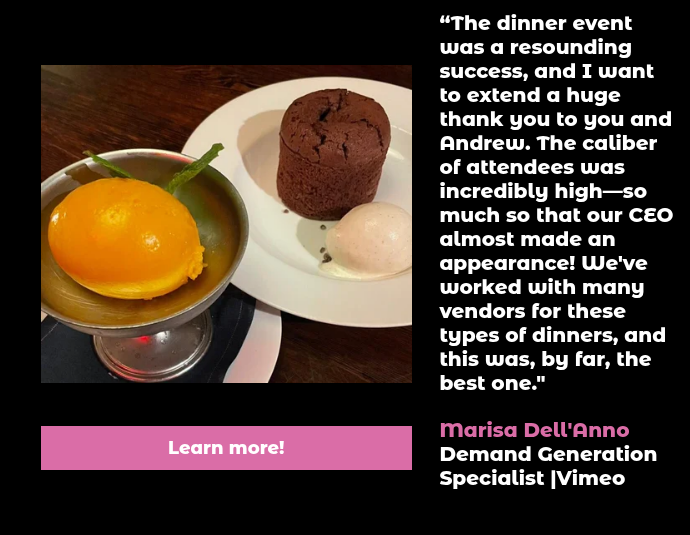
I recently shared some insights in a post about this exact topic highlighting the different questions field marketing leaders could get asked.
Today as we go into what is really considered a successful B2B event we'll break down what field marketers need to do at the planning stage to answer these four questions.
How much sales pipeline can we expect from this event?
So CFO's can be those that break through the noise and ask the necessary questions. Why? Because they know numbers don't lie. They have to create the account statements and profit and loss sheets so its natural they'd be critical on ROI, justifying spend, comparing apples to apples.
I'd explain this in detail but its better if I showed you a real-life example. Below is a critical real-time discussion between the CFO of Clay and the Co-Founder, Varun Anand. The debate is simple. Can I invite five CRO's to the Super Bowl with me. This video is not to show who is right or wrong but to show the debate and thought process.
So how do we go about answering this question then?
Ask your CFO to consider existing numbers in his estimate. For example, if closing an enterprise customer currently costs your company $35,000 and it earns you on average CLV of $200,000. That math works. However, then the CFO would suggest to "just keep doing what you're doing" why invest when we already get this traction?
Well then you answer by looking at your enterprise pipeline and showing the reality. The math is great, but we only ever close 1-3 enterprise contracts a year. To hit our quarterly and annual goals as a company, we need to engage with three times the number of enterprise decision makers we're currently engaging with.
Now that's a problem statement your CFO will think over and strongly consider. If they speak the language of numbers then look to your enterprise sales team, and CRM. Use those numbers to justify impact. Of course, its always good to be upfront that events are not a magic pill or silver bullet where we just host and close the deal.
At the end of the day, its not about keeping the cost of acquiring an enterprise lead as low as possible (that's important but not the bigger picture). It's getting enough intent from that audience as well.
Summary: Fight fire with fire 🔥 or well.. numbers with numbers
Will we build rapport with key decision makers at this event?
CMO's are aware that sales and opportunities from such activities don't happen overnight. They focus on the first major outcome because they know, if that won't happen, everything else will crumble.
Building a connection with your enterprise audience is a fundamental step towards setting your event marketing strategy up for success.
So how do we answer this question?
We look at companies that will be there, the audience the event attracts, speakers, or if you're hosting a dinner with a company like ConvergeX you get to choose who you meet...
Regardless, its essential to know pre-hand if your enterprise audience will be there or not. A strong justification is necessary.
It also goes down to the type of stakeholders you wish to attract. There are Strategic thinkers, economic buyers, operational decision makers, end-users, the reality is, enterprise sales is multi department, multi-level penetration.
For example at ConvergeX we strategically align with leaders in marketing, regional marketing, and strategic enterprise sales.
So this goes down to the fundamentals of
Who is your ICP?
Will they attend such an event?
In which capacity do they attend such events?
Who from your sales team will attend the event to build that rapport?
I'd build a short and precise document answering these exact questions to justify and answer this critical question.
The more precise you can be, the better. Look at existing deals that are hanging or stalling and map that with that event.
Speak to AE's and Sales Directors to map out which accounts are the best and you know if they do convert, they'd be worth the spend.
How many real sales opportunities can we get from this event?
An opportunity is what all the enterprise sales folk want at the end of the day. The good news is if the CMO is satisfied, answering this part would be easier.
However, this doesn't make this question an easy one to answer. The best way is to know:
1- Your average enterprise sales cycle
2- number of activities to create opportunities
Any good CRO knows that Enterprise deals don’t convert because you had a good conversation at an event. They convert because you follow a disciplined, value-led, multi-threaded process immediately after the event. Our job is to turn ad-hoc meetings into structured pipeline, fast.
Most teams treat B2B events as “lead gen.” Enterprise buyers treat them as evaluation moments. This is where misalignment can occur between the buyer and the seller.
You convert by ensuring that every contact is immediately mapped into your enterprise sales motion.
Key steps:
Pre-assign AEs/SDRs to follow-up segments before the event.
Tag ICP vs. non-ICP on the floor.
Attach each conversation to the customer’s business case.
Schedule activities based off of this data. Align with the CRO that the sales team and AE's need to also loop in multiple stakeholders from the accounts they wish to break into.
Once your CRO is aligned on this action plan, you get proper internal buy-in to make this event a success!
How will this event strategically align with our objectives?
The ultimate strategic decision maker asks the million dollar question. Well to be fair, usually at very large enterprises CEO's don't look into such matters personally. Although they always want an activity to be ultimately aligned to long term goals. Every activity should relate and sound like a puzzle that fits.
Before talking about the event, restate the company’s top 3–5 objectives.
Example categories:
-
Pipeline creation in target segments
-
Revenue expansion in strategic accounts
-
Brand reinforcement in a specific category
-
Partner ecosystem development
-
Product narrative amplification in the market
-
C-suite access for our executive team
Why: CEOs judge events by contribution to overarching strategy—not “leads” or “attendance.”
For every objective, show how this event directly supports it.
Example:
-
Objective: Penetrate the Fortune 500 healthcare market.
-
Event alignment: 38% of attendees are VP+ leaders at Fortune healthcare firms; event offers 1:1 strategic meetings with buyers who control budget. (Bonus tip! Hosting executive dinners with ConvergeX allows you to invite 100% on ICP enterprise decision makers to your event)
-
-
Objective: Accelerate enterprise pipeline velocity.
-
Event alignment: Includes 25 pre-scheduled executive briefings and a private dinner where we can multi-thread existing opps.
-
This creates a clear, traceable line from event → business outcome.
What's cool is when you host an event with ConvergeX we ensure all your attendees are strategic decision makers. So the math is already looking a lot better.
If in your organization you need sign off from the CEO, summarize your feedback from the CMO, CFO and CRO and how you're aligned. All those answered combine to answer the CEO's question. At this point when you've answered such relevant questions, you have a very strong use case. If you work at a small, medium or large size organization its useful to always loop in the CEO.
When the numbers match, the audience is crystal clear and the team is committed.
The Big Takeaway
At the end of the day, the future of B2B events isn’t about flashy stages, big-name speakers, or the latest tech hype, it’s about precision.
The companies that win in 2026 will be the ones who treat events as strategic growth engines, not line items on a marketing budget.
When field marketers can confidently answer the CFO’s pipeline questions, the CMO’s audience questions, the CRO’s opportunity questions, and the CEO’s strategic alignment questions, events stop being “nice to have” and start becoming high-performance revenue motions.
And that’s exactly why ConvergeX Connections exists. We don’t believe in chance encounters or “spray and pray” networking. We believe in putting the right executive in the right room at the right moment.
With clear objectives, a disciplined sales motion, and a measurable business case behind every conversation.
Because when the numbers add up, the audience is intentional, and the internal team is aligned, events become more than gatherings.
They become catalysts that unlock enterprise relationships, accelerating deal cycles, and driving outcomes that shape the company’s future.
This is what it takes to create a winning B2B event in 2026 and beyond!
Frequently Asked Questions
What truly makes a B2B event successful in 2026?
A successful B2B event is one that answers four critical executive-level questions:
CFO: How much real sales pipeline can we expect?
CMO: Will we build rapport with ICP decision makers?
CRO: How many real opportunities will come from this?
CEO: How does this event align with our long-term strategy?
Events aren't successful because they have big names or flashy activations—they succeed when they create intentional, high-value conversations with the right enterprise buyers and tie directly into measurable business outcomes.
How should field marketers justify event ROI to the CFO?
Speak the CFO’s language: numbers.
Use existing enterprise sales data—CAC, CLV, current close rates, and pipeline volume—to illustrate gaps.
For example, if your CAC is healthy but you only close 1–3 enterprise deals per year, you can demonstrate the need to engage 3x more decision makers.
The goal is not just lowering acquisition cost—it’s increasing enterprise intent and top-of-funnel quality.
In short: fight numbers with numbers.
How can marketing ensure they build rapport with the right ICP audience?
Start with clarity on ICP: who they are, whether they attend specific events, in what capacity, and which personas matter (strategic, operational, economic buyers).
Map the audience list to your target accounts, review stalled or active opportunities, and align with AEs and Sales Directors to prioritize which executives matter most.
If hosting with ConvergeX Connections, you can curate your attendee list to ensure 100% ICP alignment.
How do CROs create real sales opportunities from events?
Enterprise opportunities don’t emerge from casual conversations—they come from structured follow-through.
CROs should ensure:
-
Pre-assigned AEs/SDRs for follow-up
-
Segmentation of ICP vs. non-ICP on-site
-
Each conversation tied to a business case
-
Multi-threading into accounts immediately
Enterprise buyers treat events as evaluation moments, not lead-gen.
Success depends on mapping every encounter into the company’s enterprise sales motion within 24–48 hours.
How do you show CEO-level strategic alignment for an event — and how does ConvergeX increase that alignment?
To secure CEO buy-in, the event must clearly map to the company’s highest-level objectives — whether that’s expanding into a key vertical, increasing enterprise pipeline, strengthening brand authority, or gaining access to hard-to-reach C-suite buyers.
The fastest way to demonstrate this alignment is to connect corporate objectives to who will be in the room.
For example:
-
Strategic Objective: Expand into Fortune 500 healthcare accounts
-
Alignment With Event: 38% of confirmed attendees are VP+ healthcare decision makers directly matching your ICP
Where ConvergeX strengthens this even further is in the precision of attendee curation. Unlike traditional B2B events where 10–20% of the room fits your ICP, ConvergeX uses a selective invite-only process that ensures:
-
70–100% of attendees match your exact ICP criteria
-
All attendees hold strategic or economic buying power
-
Audience lists are built with your sales and marketing teams collaboratively
-
You get access to verified enterprise executives (not general conference crowds)
This dramatically increases the probability that the event directly advances CEO-level goals — because every conversation moves you closer to the accounts and personas your strategy depends on.
By ensuring your ICP is not a small fraction of the room but the room itself, ConvergeX eliminates the typical event risk and creates a direct line of sight from event investment → strategic impact.
Moaaz Nagori | Head of Marketing
Moaaz Nagori is ConvergexConnection's Head of Marketing. Moaaz has over 7 years experience in B2B Marketing & 3+ years in Sales. He's also worked with over 30 B2B SaaS, and services organizations on optimizing their sales and GTM processes during his tenure as a Co-founder at Cloudlead. Moaaz's areas of interest include event marketing, sales intelligence, go-to-market strategy, and sales & marketing strategy. He also holds a Master's Degree in Marketing & Business Management and also completed his practical Entrepreneurship studies at Draper University.